

Quick Dips
Curated topical articles on the Blue Economy

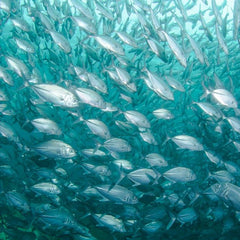
Catalina Lopez, Economist Fisheries & Aquaculture
It is essential to recognise that aquatic animal welfare extends beyond ethical considerations.
Read more → (4 minute read)

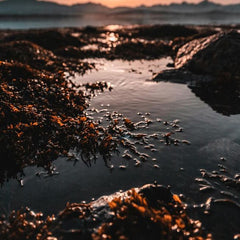
Ken Silverstein, Forbes Fisheries & Aquaculture
Caribbean ingenuity is helping reduce carbon emissions by 8 million metric tons by harvesting sargassum seaweed and turning it into fertilizer and paper pulp.
Read more → (6 minute read)


Danielle Rossingh, Impact Investor Fisheries & Aquaculture
Lissy Smit, CEO of sustainable aquaculture investment fund Aqua-Spark talks to Impact Investor about fundraising, the sector’s first unicorn and why it is launching a new Africa fund.
Read more → (3 minute read)


Songlin Wang and Lebin Liu, Impact Economist Fisheries & Aquaculture
Experts have observed the importance of recognizing and incentivizing the contribution of small-scale aquaculture operations in China.
Read more → (7 minute read)


ABHAY H. PANDE AND J. ANAKHA, Maritime Executive Fisheries & Aquaculture
The primary focus of Blue Biotech is to enhance accessibility of marine resources and how we can benefit from them.
Read more → (11 minute read)


The Fish Site Fisheries & Aquaculture
Hatch Blue has announced that is has now raised €75 million for its Blue Revolution Fund.
Read more → (3 minute read)


Impact Economist Fisheries & Aquaculture
40% of all the startups in the seaweed sector are now led by women.
Read more → (3 minute read)


The Fish Site Fisheries & Aquaculture
A new tool is in its first iteration and will be used to collect insights into aquaculture supply chains.
Read more → (3 minute read)


Ocean 14 Capital Fisheries & Aquaculture
Since 2012, mass mortality events (MMEs) affecting farmed salmon have become more frequent and severe
Read more → (4 minute read)


The Fish Site Fisheries & Aquaculture
Marking an important step towards the mass cultivation of seaweeds, Sea6 Energy has launched the world’s largest mechanised tropical seaweed farm off the coast of Lombok, Indonesia.
Read more → (2 minute read)


The Maritime Executive Fisheries & Aquaculture
The EPA has opened solicitations for grant money totaling $3 billion, primarily aimed at reducing emissions and diesel exhaust pollution for cleaner ports.
Read more → (3 minute read)


Andrea Willige, World Economic Forum Fisheries & Aquaculture
KAUST in Saudi Arabia has released the Global Ocean Gene Catalog 1.0. It contains more than 317 million gene clusters and is the largest open-source catalogue of marine microbes to date.
Read more → (3 minute read)


Rashid Sumaila, The Conversation Fisheries & Aquaculture
Study finds that without nurturing ocean life, addressing climate change becomes an uphill battle.
Read more → (3 minute read)


Scott Spillias, World Economic Forum Fisheries & Aquaculture
Potential benefits of marine permaculture include ecosystem restoration, pollution reduction and empowerment of local communities.
Read more → (3 minute read)


Emmy Hawker, ESG Investor Fisheries & Aquaculture
Sustainable aquaculture can serve climate objectives. Fish farms can be co-located with new renewable energy sites and farmed seafood is a comparatively low-carbon source of protein.
Read more → (3 minute read)


Tom Crowfoot, World Economic Forum Fisheries & Aquaculture
Companies around the world are making the most of an unexpected tool in the world’s fight to tackle the climate crisis – seaweed.
Read more → (3 minute read)


A new reef insurance policy will help with reattaching broken corals and debris clean-up; the insurance payouts will provide community assistance activities that will alleviate food and water security concerns caused by storm damage.
Read more → (3 minute read)


Linda Chen, Hatch Fisheries & Aquaculture
An analysis of the $808 million invested in the aquaculture industry by venture funds in the last 12 months.
Read more → (3 minute read)


Brent E. Feldman, World Economic Forum Fisheries & Aquaculture
As ocean acidification intensifies, the future of the oyster hangs in the balance – and with it, environmental and economic ecosystems.
Read more → (3 minute read)


Michael Le Page, New Science Fisheries & Aquaculture
Studies find that bottom trawling, a controversial and destructive fishing technique, releases large amounts of carbon dioxide from the seabed.
Read more → (4 minute read)

